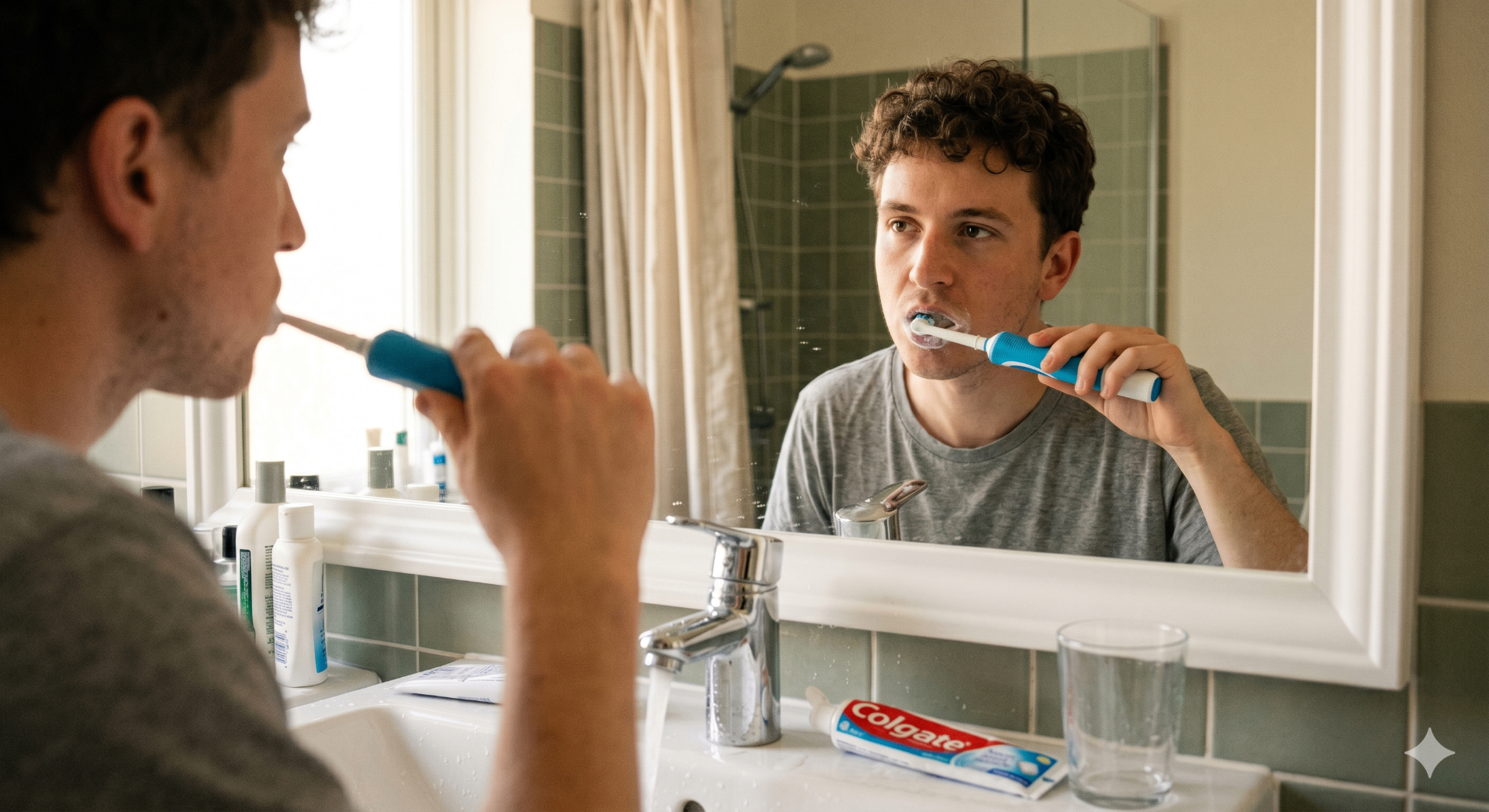
Every toothpaste ad shows a full ribbon curling across the brush head. That image sells paste; it does not reflect any clinical recommendation. The correct amount is smaller than almost everyone uses, and using less actually improves results.
New to this topic? Read our full natural toothpaste guide — fluoride free vs. hydroxyapatite, ingredients worth paying for, and what to avoid.
The correct amounts
- ●Adults — a pea-sized amount, about 0.25 grams
- ●Children 3 to 6 — pea-sized, supervised
- ●Children under 3 — a rice-grain smear
Why more is not better
Excess paste produces excess foam, and foam makes people cut brushing short and rinse aggressively — the two behaviours that most reduce the contact time your active ingredient needs. A smaller amount keeps the paste concentrated where the brush is working.
Spit, do not rinse
Rinsing with water immediately after brushing washes away the fluoride or hydroxyapatite before it can act. Spit out the excess, leave the thin film, and skip the mouthwash for at least 30 minutes.
"Contact time, not quantity, is what remineralizes enamel."
A practical side effect
A pea-sized dose roughly quadruples how long a tube lasts. That makes a premium natural or hydroxyapatite paste substantially cheaper per month than the shelf price suggests.
Frequently asked questions
How much toothpaste should an adult use?
A pea-sized amount, roughly 0.25 grams. The full ribbon shown in advertising is about four times more than needed.
Should you rinse your mouth after brushing?
No. Spit out the excess and leave the thin film of paste so the active ingredient stays in contact with enamel.
Pea-sized for adults, rice-grain for toddlers, spit and do not rinse. It is the cheapest upgrade in oral care.