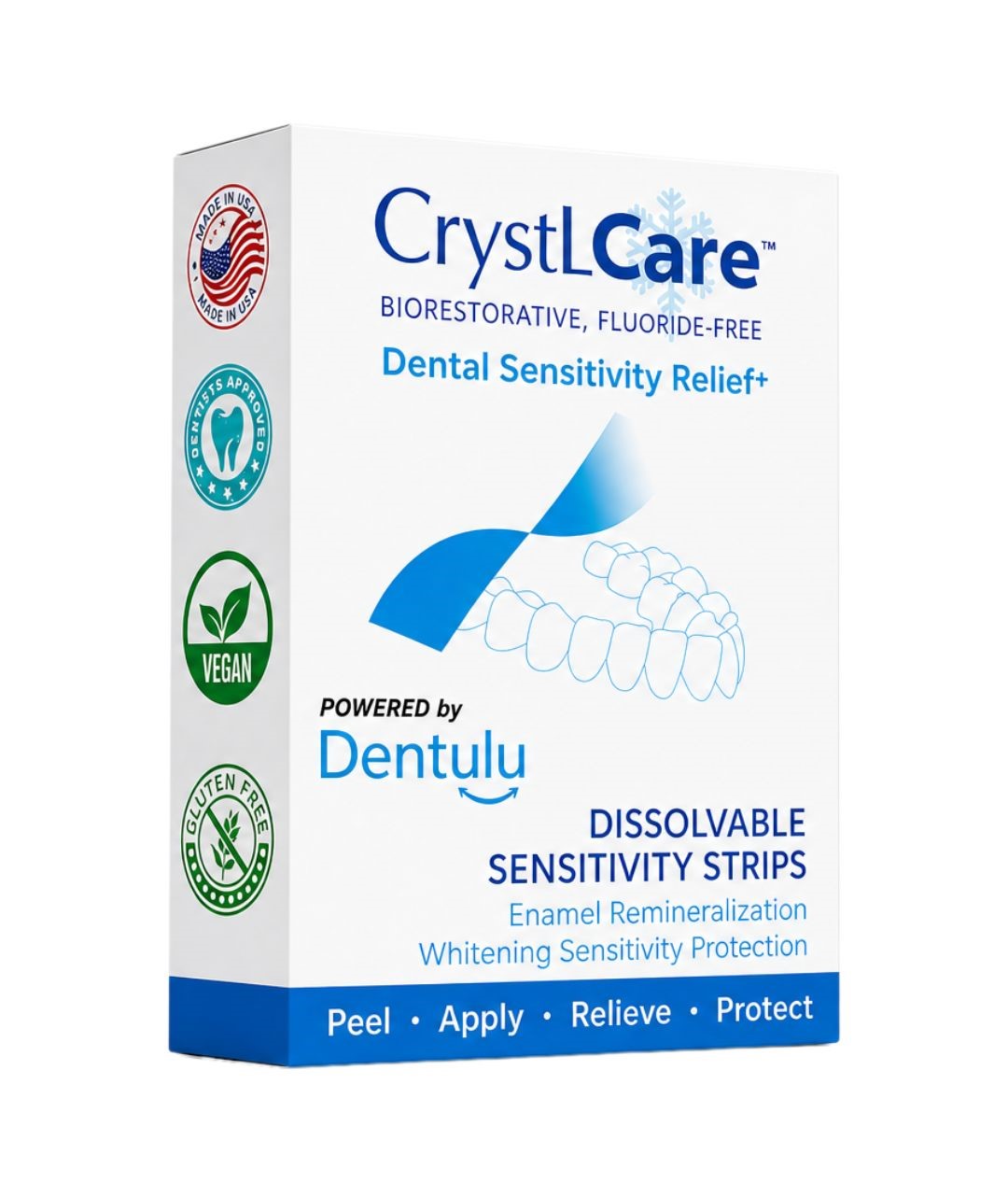
The verdict
A genuinely different delivery system: a dissolvable strip that holds calcium and phosphate against the tooth for far longer than a two-minute brush ever could. Expensive per use, but the mechanism is sound and the sensitivity results in our testing were the most noticeable of anything in this category.
Persistent cold and sweet sensitivity that toothpaste alone has not fixed.
You want a daily replacement for toothpaste — this is an add-on treatment, not a substitute.
Why contact time matters
Remineralization is a function of mineral availability multiplied by contact time. A toothpaste gets two minutes and is then rinsed away. A strip that adheres and dissolves keeps calcium and phosphate at the enamel surface for far longer, which is the whole argument for the format.
Using them
They go on clean, dry teeth and dissolve without residue. There is a brief chalky sensation and no flavor to speak of. Fourteen strips per pack means a two-week course if used nightly, which matches how the sensitivity benefit accrues.
The panel
Fluoride-free, SLS-free, vegan, no artificial colors. For anyone managing sensitivity while also avoiding fluoride, options are thin, and this is one of the more defensible ones.
What we liked
- Long mineral contact time — the format's real advantage
- Noticeable sensitivity relief within a two-week course
- Clean panel: fluoride-free, SLS-free, vegan
- Mess-free, no rinsing
What we didn't
- High cost per use
- Two-week course, not an instant fix
- An addition to your routine, not a replacement
Common questions
How long until I notice a difference?
Most of the benefit in our testing landed in the second week. If a single tooth still spikes with cold after a full course, that points to a crack or decay and needs a dentist, not a strip.
Can I use them with a hydroxyapatite toothpaste?
Yes — they stack well, since both are depositing the same class of mineral by different routes.