Fluoride free toothpaste is one of the most searched terms in oral care, and the debate around it is louder than the evidence. The clinical position is narrower than either side suggests: fluoride at toothpaste concentrations is safe and effective, and going without it is also reasonable — provided you swap in a remineralizing alternative rather than nothing at all.
New to this topic? Read our full natural toothpaste guide — fluoride free vs. hydroxyapatite, ingredients worth paying for, and what to avoid.
What fluoride actually does
Fluoride converts hydroxyapatite in enamel into fluorapatite, a crystal that dissolves at a lower pH. In plain terms, it raises the acid threshold at which your teeth start to break down. Seventy years of population data support it at the 1000–1500 ppm found in over-the-counter paste.
The safety question, answered plainly
The documented risk from toothpaste is dental fluorosis — faint white flecking on developing teeth — and it comes from swallowing paste in early childhood, not from brushing as an adult. That is why the guidance is a rice-grain smear under age three and a pea-sized amount after.
When fluoride free makes sense
- ●Toddlers and young children who reliably swallow toothpaste
- ●Households already getting fluoride from water, rinses, and professional varnish
- ●People with a personal preference to limit total exposure
- ●Anyone advised to avoid it by their dentist or physician
The mistake that makes fluoride free risky
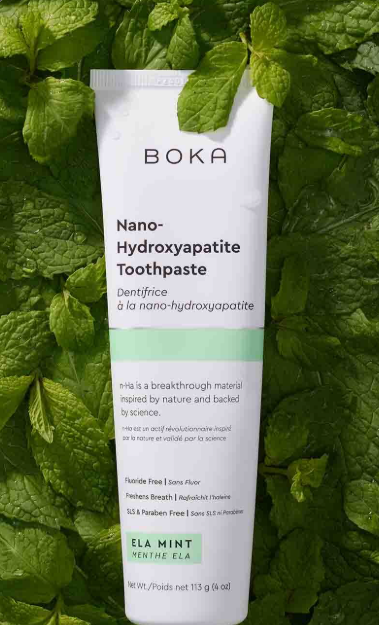
Switching to a paste with no active ingredient at all. That is the version of fluoride free that raises cavity rates. If you go without fluoride, choose 10% nano-hydroxyapatite so your enamel still receives mineral support twice a day.
"Fluoride free is a safe choice. Active-ingredient free is not."
Frequently asked questions
Is fluoride free toothpaste safe?
Yes, provided the formula contains an alternative remineralizing active such as nano-hydroxyapatite. Fluoride free pastes with no active ingredient clean plaque but offer little cavity protection.
Will I get more cavities without fluoride?
Not necessarily. Trials of 10% nano-hydroxyapatite show comparable caries prevention in average-risk adults. People with a history of frequent decay should stay with fluoride unless their dentist advises otherwise.
Skipping fluoride is fine. Skipping remineralization is not. Read the Active Ingredients box before you switch.